Blog Post
Equipment Maintenance Software: Key Features, Benefits, and Best Tools
Compare the best equipment maintenance software of 2026 and see which CMMS tools deliver the highest efficiency and technician adoption.



Key Takeaways
Equipment maintenance software is a digital tool designed to streamline and automate the entire lifecycle of machinery and asset maintenance.
The primary goal of equipment maintenance software is to transform maintenance into a proactive strategic advantage by digitizing workflows and replacing fragmented methods like whiteboards and spreadsheets.
A robust equipment maintenance software platform relies on five core functions: Asset Management, Work Order Management, Preventive Maintenance (PM) Scheduling, Inventory Management, and Reporting.
Equipment maintenance software offers tangible ROI by extending equipment lifecycles, lowering overtime costs, and ensuring compliance with safety standards.
The top equipment maintenance tools are distinguished by how easily technicians can adopt them, how well they integrate with existing tech stacks, and how much they improve team efficiency.
What Is Equipment Maintenance Software?
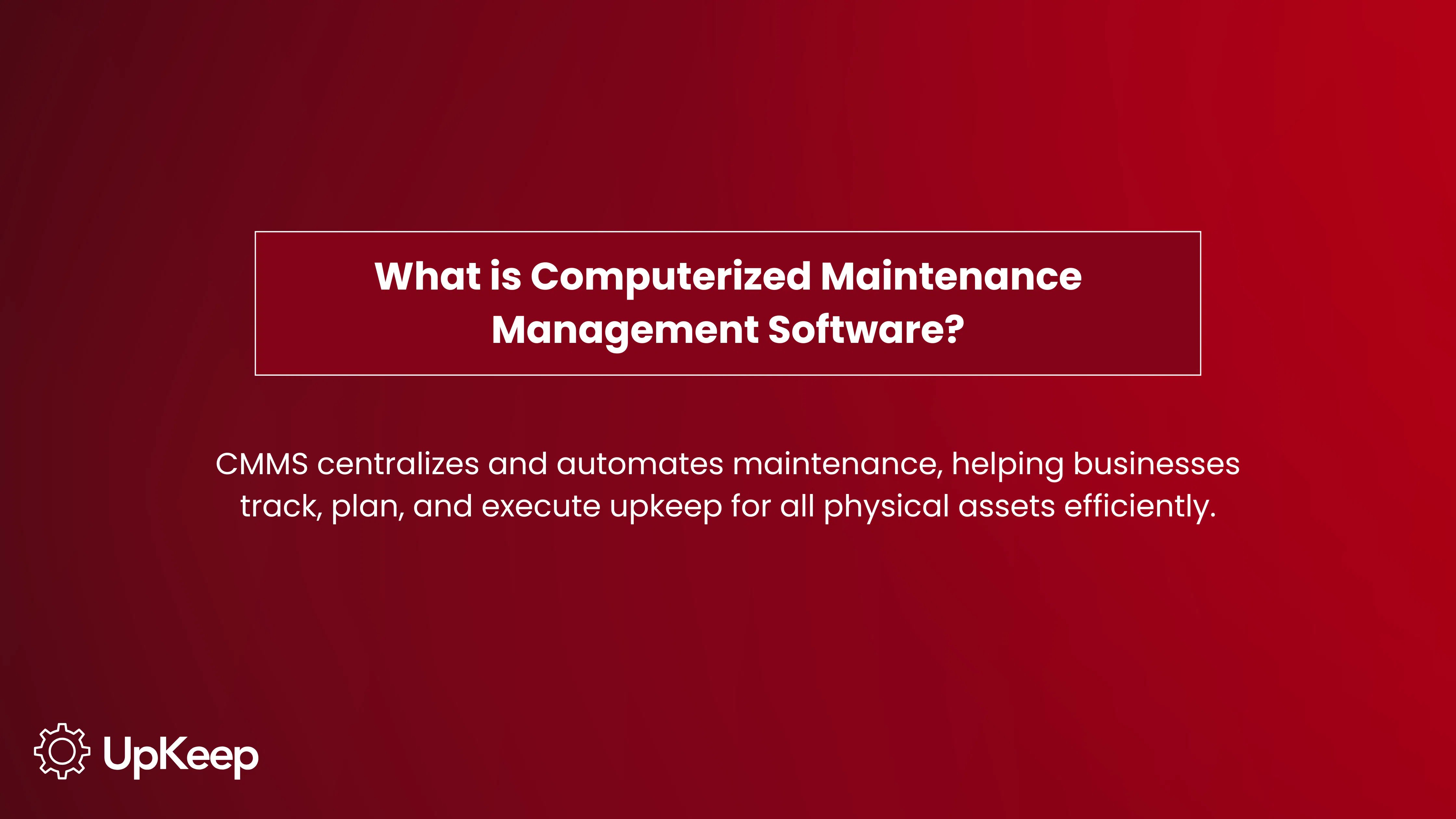
Equipment maintenance software is a digital tool designed to streamline and automate the entire lifecycle of machinery and asset maintenance.
Computerized Maintenance Management Software (CMMS) is the standard software for equipment maintenance. It centralizes and automates maintenance operations, allowing businesses to efficiently track, plan, schedule, and execute maintenance for all physical assets.


Industries That Need Equipment Maintenance Software
Equipment maintenance software is essential for any sector where asset reliability directly impacts the bottom line. It is widely used in
Pharmaceutical Industries
Food and beverage Companies
Aerospace Manufacturing
Facilities management
Hospitality Management
Property Management
Healthcare Organizations
Renewable Energy
Municipal Services
Educational Institutions
Key Components of Equipment Maintenance Software

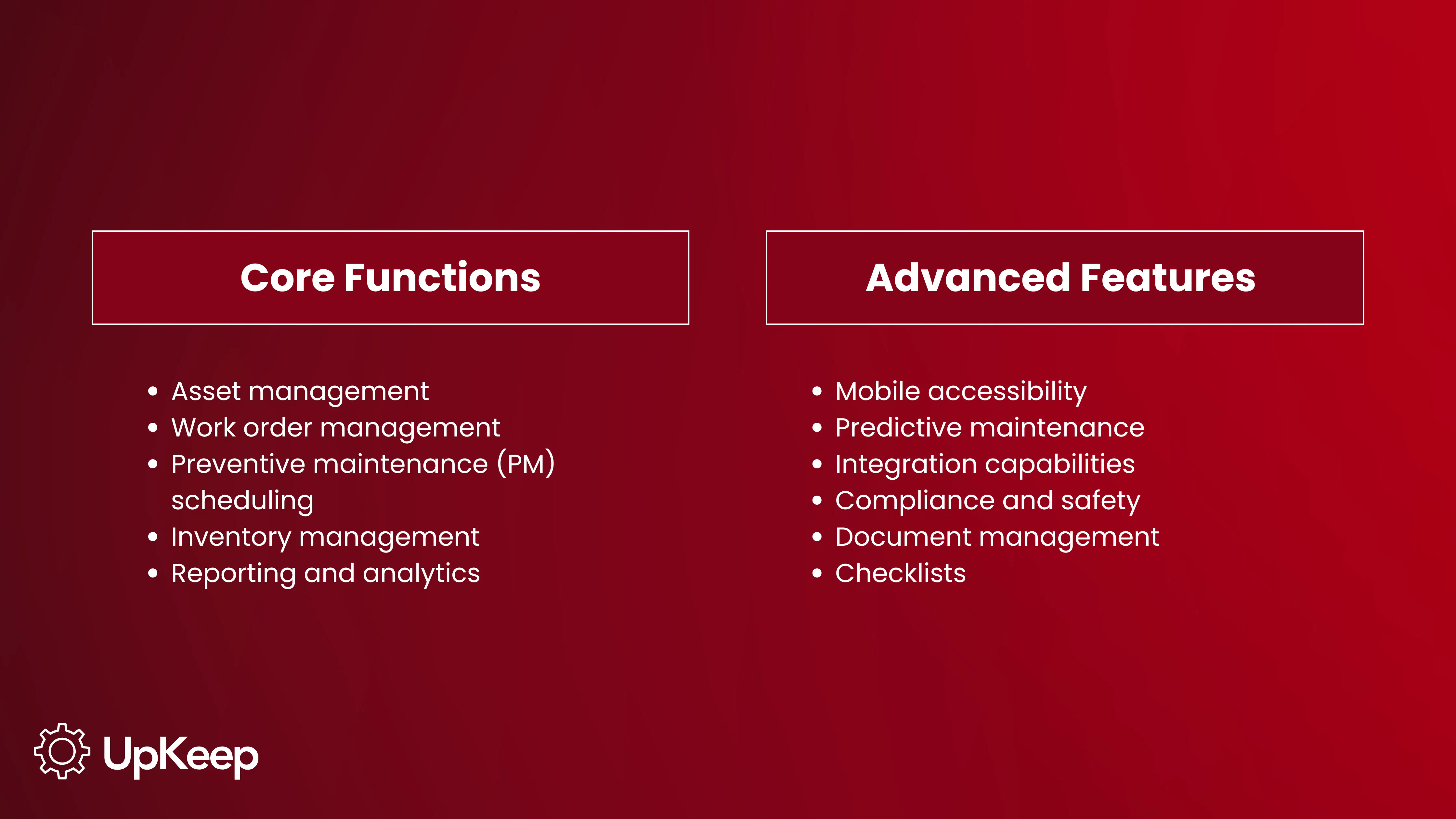
Equipment maintenance software features are generally split into two main groups: core functions and advanced capabilities.
Core Functions
An ideal equipment maintenance platform relies on five core functions: Asset Management, Work Order Management, Preventive Maintenance Scheduling, Inventory Management, and Reporting and Analytics.
Asset Management: The equipment maintenance software becomes the central filing cabinet for all equipment data. The equipment maintenance software records the entire history of an asset, from acquisition to disposal, including all past repairs and maintenance activities.
Work Order Management: The equipment maintenance software automates the digital creation, assignment, and tracking of work orders. Managers can also monitor task status in real time, ensuring accountability and improving communication between departments.
Preventive Maintenance (PM) Scheduling: An equipment maintenance software automatically generates maintenance tasks based on specific triggers, such as a calendar date (e.g., every 3 months) or usage metrics (e.g., every 500 runtime hours).
Inventory Management: This software module monitors stock levels of spare parts and consumables, ensuring critical items are on hand when a machine breaks down. Some systems integrate with purchasing systems to automatically reorder parts when supplies run low.
Reporting and Analytics: Equipment maintenance software should generate detailed reports on key performance indicators (KPIs). Graphical reports and dashboards help identify recurring issues or patterns, enabling data-driven proactive maintenance strategies.
Advanced Features
Advanced features of a CMMS transform these platforms into comprehensive Asset Operations Management solutions.
Mobile Accessibility: Cloud-based mobile apps allow technicians to access the system from anywhere in the field. Technicians can view work order statuses, receive immediate updates, and communicate with managers in real-time without returning to the office.
Predictive Maintenance: Predictive maintenance utilizes data and AI to uncover insights and predict failures before they occur. Instead of waiting for a breakdown or a calendar date, the system automatically triggers a work order when equipment readings drift outside normal parameters.
Integration Capabilities: Integration capabilities turn the equipment maintenance platform into a central hub for operational data. Robust APIs enable seamless integration with Enterprise Resource Planning (ERP), Supervisory Control and Data Acquisition (SCADA), and financial software systems, allowing seamless data transfer between the systems.
Compliance and Safety Features: Advanced platforms incorporate Environmental, Health, and Safety (EHS) modules directly into the maintenance workflow. Teams can report injuries, near misses, and hazards immediately via the platform. Safety managers can link incidents directly to corrective work orders, ensuring that job hazards are documented efficiently in compliance with OSHA regulatory requirements.
Document Management: According to a Fluid Topics study, over 80% of service technicians spend 30 minutes to two hours searching for the right information to complete their service tasks daily. A robust equipment management platform provides integrated document management, ensuring knowledge is preserved and readily accessible. Users can attach photos, PDFs, and schematics directly to assets and work orders.
Checklists: Advanced checklist features ensure that every technician performs tasks consistently, reducing errors and liability. The software can enforce workflow steps, such as requiring a photo or a signature before a work order can be closed.
The Top Benefits of Equipment Maintenance Software
Implementing equipment maintenance software acts as a decisive shift for operational teams. The following benefits outline why successful organizations replace paper and spreadsheets with dedicated maintenance software.
Maximizes Equipment’s Useful Lifetime
Industrial assets often represent massive capital investments. Running machines to failure drastically shortens their usable life and accelerates the need for expensive replacements. Maintenance software ensures assets receive consistent care, thereby extending their lifecycles and ROI.
Reduces Unexpected Equipment Downtime
According to the Wall Street Journal, unplanned downtime costs industrial manufacturers an estimated $50 billion annually, and equipment failure accounts for 42 percent of that downtime. Maintenance software directly addresses this by facilitating a shift to preventive strategies.
Makes Maintenance Scheduling Efficient
Manual scheduling methods, such as whiteboards and spreadsheets, often lead to missed tasks and human error. Maintenance software automates the scheduling process to ensure the right work happens at the right time.
Improves Team-wide Communication
Communication breakdowns between the office and the field cause delays and errors. Technicians often waste time chasing down manuals or clarifying vague instructions. Equipment maintenance software serves as the single source of truth for the entire organization.
Top 5 Equipment Maintenance Software of 2026
We tested and compared equipment maintenance software to help you make the best choice for your team. To shortlist these five equipment maintenance software, we read help articles, explored vendor websites, and engaged in in-depth analyses by maintenance and industry experts. Read the full comparison guide here.
#1 - UpKeep CMMS - First Choice for Agile Teams
UpKeep’s advantage lies in its intuitive design, making it the first choice for maintenance technicians and managers. UpKeep is recognized as the best mobile CMMS solution. It allows users to create, update, and manage work orders from any device, ensuring real-time data access across multiple locations.
UpKeep also sets itself apart through its advanced automation and artificial intelligence features, bundled as UpKeep Intelligence. This includes NOVA, an intelligence agent that allows users to automate bulk maintenance actions, clean up data, and manage workflows using natural-language prompts.
The Voice Fill feature allows users to speak naturally into the app, and the AI automatically transcribes and fills out work orders or requests hands-free. The Smart Checklist Builder can instantly generate preventive maintenance checklists based on asset type and text prompts.
UpKeep effectively centralizes asset management, inventory, and preventive maintenance while excelling in Environmental, Health, and Safety (EHS) compliance. The software fosters strong team collaboration through shared task lists and customizable workflows, helping managers prioritize pressing issues and streamline operations for many professionals worldwide.
#2 - Fiix
Fiix establishes itself as a strong Enterprise Asset Management (EAM) solution tailored for midsize to large organizations that require robust data handling. The platform offers tools, such as asset-criticality toggles and work-order rollups, that support complex operations. Fiix further eliminates data silos through integrations with enterprise systems, while its real-time reporting engine provides immediate access to critical metrics, including Mean Time Between Failures (MTBF).
#3 - eMaint CMMS
eMaint CMMS is defined by its scalability and customization, positioning it as an excellent choice for complex, unique maintenance workflows. The platform allows users to tailor everything from individual fields and workflows to fully customizable dashboards that visualize critical metrics, such as downtime and cost analysis, to support decision-making. eMaint supports comprehensive asset tracking, maintaining detailed records of maintenance history, warranties, and compliance data for equipment in regulated environments.
#4 - Limble CMMS
Limble CMMS empowers teams with automation tools that trigger preventive maintenance schedules based on usage data or calendar intervals. It ensures operational integrity by automatically storing detailed asset logs for simplified audits and compliance reporting. Additionally, Limble provides live reporting capabilities that eliminate data latency, giving decision-makers immediate access to real-time operational insights.
#5 - MaintainX
MaintainX centers its value on real-time communication and rigorous compliance support. This focus makes it a solution for teams that require instant updates and strict adherence to procedures. The platform features built-in messaging tools that foster immediate collaboration between technicians and managers. Its dynamic workflow management ensures that updated instructions are automatically applied to work orders, guaranteeing consistent execution.
Read more - 2026 CMMS Software Comparison Guide
UpKeep Delivers the Equipment Maintenance Advantage
UpKeep transforms maintenance from a fragmented series of tasks into a unified strategic advantage. The platform does this by addressing the three critical pillars of modern operations: efficiency, intelligence, and connectivity. We empower your organization to move beyond simple management and support you to achieve operational excellence.
Streamlined Efficiency
Our fast, reliable tools help teams accomplish more every day by removing the friction of manual administrative work. This leads directly to more uptime, reduced administrative burden, and higher technician satisfaction.
Actionable Intelligence
UpKeep uses data and AI to uncover insights that improve asset reliability and business performance.
Unified Connectivity
UpKeep brings people, data, and workflows together to ensure your organization operates as one. We eliminate silos and duplicate data to create one connected ecosystem.
Ready to turn equipment maintenance into your competitive advantage? Join over 4,000 businesses using UpKeep to reduce downtime and streamline operations. Request a Custom Demo
Frequently Asked Questions for Equipment Maintenance Software
Who uses equipment maintenance software?
Equipment maintenance software is used by frontline users and operational managers who need to complete work faster, reduce manual effort, and increase team productivity. It is also helpful for Facilities managers, reliability engineers, and operations leaders who need data-driven insights to shift from reactive to proactive maintenance. This technology also appeals to executives, multi-site operators, and enterprise leaders who require unified visibility across locations, teams, and systems.
What is the difference between CMMS software and enterprise asset management (EAM) software?
A CMMS (Computerized Maintenance Management System) focuses specifically on operational maintenance to keep assets running day-to-day (handling work orders, repairs, and technician scheduling), while EAM (Enterprise Asset Management) covers the entire asset lifecycle from start to finish.
How does equipment maintenance software help reduce downtime?
The software minimizes downtime by using automated preventive schedules and IoT-driven predictive alerts to resolve issues before they cause catastrophic failure. It further accelerates recovery times (reducing Mean Time To Repair) by providing technicians with instant mobile access to digital manuals and repair history.
4,000+ COMPANIES RELY ON ASSET OPERATIONS MANAGEMENT
Leading the Way to a Better Future for Maintenance and Reliability
Your asset and equipment data doesn't belong in a silo. UpKeep makes it simple to see where everything stands, all in one place. That means less guesswork and more time to focus on what matters.






![[Review Badge] Gartner Peer Insights (Dark)](https://www.datocms-assets.com/38028/1673900494-gartner-logo-dark.png?auto=compress&fm=webp&w=336)