JAFCO reduces response time from 80 to 8 hours
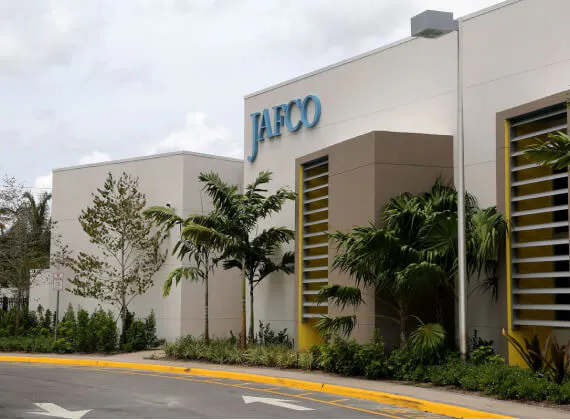
Jewish Adoption and Foster Care Options (JAFCO) offers childcare, adoption, and foster care for abused, developmentally disabled, and at-risk children in the Jewish community. They also offer life skills training for both children and their families. With multiple buildings on two campuses covering 90 acres, JAFCO needed a better maintenance system. Michael Moran, venue manager for the facilities department, implemented UpKeep’s mobile-first solution as the answer soon after he began working with the company.


Challenge
When Michael was asked to take over facilities management at JAFCO, the maintenance situation was inefficient and unorganized. It involved printed work order forms and poor communication systems. Confidence in the technician team was low and the technicians themselves were unmotivated.
Solution
Michael had experience with UpKeep from a previous job with a restaurant group. When he joined the JAFCO team, he knew that a system like UpKeep would be extremely beneficial for them. After taking a look at the other computer maintenance management systems (CMMS) options, he was able to convince management to try UpKeep out with a free 30-day trial.
UpKeep was received well among technicians and the maintenance situation drastically improved.
Results
The most significant result that JAFCO has experienced is a drastically reduced response time, which used to exceed 80 hours. Today, it’s dropped to one-tenth of that; taking only about eight hours to respond to work order requests.
UpKeep has also helped JAFCO ensure that maintenance requirements are fulfilled to ensure that warranties for big-ticket items are not accidentally voided. Finally, the organization can better track vendors and expenses, including how much was spent on particular services and repairs, which helps JAFCO make better decisions in the long run.
Struggling With the Initial Maintenance System
Michael became familiar with UpKeep when he worked at a restaurant group as the chief culinary officer. In 2019, he began working with JAFCO and immediately saw the issues.
“It wasn’t pretty,” Michael said. “Communication was bad – some people would call, some would send an email, some would text. There was also a lack of confidence in the ability of the staff.”
The work order submission system was particularly poor. “There was a stack of printed work order forms near the front desk for people to fill out,” Michael explained. “Sometimes they got turned in, sometimes they were forgotten. Sometimes we got 20 of them in a day. I had a binder full of work orders, half of which I couldn’t understand. Many of them had been submitted a long time ago and hadn’t been taken care of, which really worried me. There wasn’t any real sort of order or defined process – it was just willy-nilly.
“Even though the spreadsheet system may have been an acceptable solution, at the end of the day computerized maintenance systems are just more practical,” Michael reflected. “Even the most efficient spreadsheet system isn’t going to measure up to a CMMS. I found that with a spreadsheet system, I created a situation where I wasn’t managing the process – I was basically a bookkeeper. I spent a lot of time on a spreadsheet that wasn’t an effective tool because only I could see it. I knew that there had to be a better system for taking care of those mindless day-to-day tasks.”
Implementing UpKeep
Before choosing UpKeep, Michael looked at other options. “I did my homework and looked at alternatives,” he said. “Though I didn’t go into the testing process with any preconceived notions that UpKeep was going to be the solution, I felt that most of the other options were knocking off of what UpKeep already had put together. It seemed that they were mostly jacked-up Excel spreadsheets with no real user-friendly tools.
“I wasn’t about to take chances on something that’s not proven,” Michael continued. “And my previous experience with UpKeep definitely provided sufficient proof.”
The implementation process didn’t happen organically, but Michael ignored the resistance.
“The initial response was that UpKeep cost too much,” he explained. “But I was able to get a free 30-day trial, and I said, ‘Listen, please let me give this 30 days, and if we’re still in the same situation at the end of the month, don’t get UpKeep – but you should probably fire me too.’
“Obviously, it worked out well,” Michael concluded. “The training process did take some time, however, as some team members just aren’t really technical people.”
Managing End-User Needs
Michael and his team work with people who are primarily therapists, educators, and health care professionals. “If you ask them what the bar pressure reading is on an 8-ton compressor, they’re going to look at you like you have three heads and ask what a compressor is,” Michael said.
Michael and his team understand that they’re hired to take care of what is beyond the knowledge of most of the other employees in the company.
“It’s my job to take care of maintenance problems – all they know is that it’s too hot in a given area,” he said. “We’re the behind-the-scenes people who take care of issues.”
Reducing Response Time
UpKeep has drastically reduced response time for Michael and his team. “Our response time used to be over 80 hours,” Michael said. “It’s now less than eight hours. It’s an incredible average considering the fact that some tasks require that we bring in outside people to complete.”
Speedy response time may be critical for an organization like JAFCO. “One of the gates failed on the weekend, late Saturday night,” Michael explained. “That means we have a facility with a gate that’s no longer secure and might put kids at risk. So I immediately put out a work order, and within 20 minutes one of my guys was there. Not only did he fix it, but we haven’t had a problem since.”
Another similar incident happened at the company’s annual gala. “In the middle of the event I got a call saying that the fire alarm was going off in another building an hour away,” Michael explained. “Even if I broke every speed limit, I wasn’t going to make it in time. So I put it out on UpKeep, and my maintenance site supervisor was there within half an hour. It turned out to be a false alarm.”
Improving the Culture
“Morale was low when I started,” Michael said. “Guys were almost ready to leave – they didn’t feel appreciated and they didn’t feel like they were in the loop as far as what they were supposed to do. Technicians used to sit around looking at social media or whatever on their phones when there was work to be done. Throughout the week they were waiting for Friday when they’d be done with work.”
Additionally, poor response time and organization caused reduced trust in the technician team.
Michael thinks that listening to his technicians and believing in them was what caused the change. “There was an investment made in them,” he said. “We believed in them enough to adopt a system that makes sense. They’re getting very specific, directed information so that they can actually accomplish tasks.
“I think that the positive reinforcement of checking something off when it’s done also makes you proud of what you’re doing,” he reflected. “And the guys working here don’t sit around. They’re always watching for work orders, and when they come in, they’re ready to jump on it and get it done.
“And on the other side of it, too, I make sure that they’re recognized for their efforts,” Michael continued. “One of my guys was promoted to supervisor and got a significant raise. The other guys also got raises and some got extra time off as a little bonus for the high productivity level.”
The three maintenance technicians are 40, 55, and 80 years old, and Michael ensures that the team understands their limitations. “When I first got here, they'd climb up on an 18-foot ladder to change a light bulb,” Michael said. “I wasn’t okay with that for safety reasons, so instead we took care of it with an electrical contractor.”
Michael also has to navigate the different skill sets of each team member. “One knows plumbing, one knows AC, one knows electrical, and none of them like to paint,” he said. As a result, the technicians have come to trust each other.
“We have a very warm, family sort of approach,” Michael said. “I meet with my technicians every Monday and Friday. We are always on point as far as what needs to happen for a given day. It’s my job to give my team the tools they need.”
Productivity levels are increasing for the team. In three months, the technicians closed almost 300 work orders.
Tracking Data, Expenses, and Vendors
“From the management side, we’re able to look at expenses and track vendors,” Michael said. “We’re able to look at what we spent last year on exterior lighting repairs or air conditioning. We can get granular, and that’s going to be very valuable for me going forward.
“The ballroom is starting to book a lot of events – we have a wedding event for 150 on Saturday, and on Sunday a birthday party for 120,” Michael continued. “All those moving parts can become work orders so that the team can see what’s going on.”
“The people in my department get together twice a week,” Michael said. “We try to reduce the work orders we’re paying other people to do and instead, if possible, complete them ourselves. For example, we were paying someone to pressure clean because nobody likes to do it. Outside workers simply don’t have the big picture view that we do.”
Improving Communication
“Before UpKeep, calls would come over the radio that maintenance was needed,” Michael said. “But no one identifies what they need maintenance for – it could be that someone needs two shoeboxes brought in from a car.”
Michael pointed out that anyone can carry boxes. Though the technicians are happy to help out, they were primarily hired for maintenance jobs. “I try to separate our work orders into those that others can do just as well and those that only technicians can complete,” Michael said.
“We’ve been trying to make the most of our time as well,” he continued. “Each day we talk through the next day – for example, I know that the most productive hours of the day are the first three and I have people in at 7:30 a.m.”
The JAFCO team has also taken advantage of UpKeep’s requester system. “We also have about seven requesters,” Michael said. “We really narrow down who we want doing it since sometimes you can get bizarre requests that don’t make any sense. All those requests come to me and I do the approvals.”
The entire agency can see how quickly the team completes work orders. “I think it gives everyone confidence that problems are going to be resolved,” Michael explained. “There was a broken lock on one of the group homes. I had the door fixed before the requester had a chance to see that it was even approved.”
Managing Outside Vendors
“We’re located in South Florida, and this building has literally 26 different air conditioning compressors and systems,” Michael explained. “When something in the system goes down, it goes down – and it’s not pretty. We get hot pretty quick.”
Failures used to mean that the team was scrambling around trying to hire anyone who could fix the problem as quickly as possible. “But maybe Company A didn’t fix it, so we try Company B, and then Company C fixes it and blames Company B, but doesn’t know about A,” Michael explained. “It was dizzying.”
To avoid that type of frantic reactive maintenance, Michael had outside companies come in and look at doing a maintenance contract. But this solution had problems of its own. “The contract they wanted was $3,500 a month, just to replace filters and belts and check systems,” Michael said.
“So I found a few local vendors that specialize in high-end compressors,” he continued. “One particular company works really well with us. The team there is in the UpKeep system, so they’re familiar with our setups and we can contact them through UpKeep. We can keep track of their work and communicate more specifically with them. And we always are confident that they’re going to come and do a task right.
Tracking Warranties
“We have a huge flat roof that has a 20-year warranty,” Michael explained. “But under the warranty specifications, it needs maintenance to be done every four months. If you miss a day, the warranty gets voided and we’re in trouble.”
Before UpKeep, the roof maintenance wasn’t monitored properly. “We almost lost the warranty,” Michael said. “Now that’s a recurring task on UpKeep. Within 72 hours of when that inspection needs to happen, myself, the company, and the technicians get an alert from the system.”
A similar situation occurred involving the elevator safety inspections. “I was in a situation where our elevator inspections had expired,” Michael said. “I called my elevator vendor only to be informed that they were no longer completing inspections. So I got a notice that I’m in violation and going to get fined for failing to complete the inspection – but my vendor forgot to tell me they’re no longer doing it. I quickly made arrangements with a third party, but, again, that was something I could have easily missed.”
The roof maintenance, elevator inspections, and other similar tasks are now in the UpKeep system as recurring tasks. “Those jobs are no longer in the background,” Michael said.
Appreciation of Upper Management
“The upper management definitely appreciates me, but sometimes they tell me to slow down. My response is that once you slow down, it’s over,” Michael said. “But overall, management is confident in the abilities of the facilities team. There’s no longer any question if things are going to get done.”
Now that management trusts that Michael is going to get things done, he’s been given charge of more.
“No good deed goes unpunished,” Michael laughed. “Just two weeks ago, they asked me to put together a renovation budget, and I’m at $1.2 million in work that needs to be done. I’ve learned more about replacing a roof in the last six weeks than anybody would ever want to know, but we have about half a million dollars worth of roofing work. It’s no small thing to manage, especially since we’re not stopping operations for it. Though I feel very honored, at the same time I feel like running – but I think it will work out well.”
Want to keep reading?






Equipment / Manufacturing
Columbia Fruit saves money with organized inventory


Education
Alum Rock Union School District eases the burdens of miscommunication
4,000+ COMPANIES RELY ON ASSET OPERATIONS MANAGEMENT
Leading the Way to a Better Future for Maintenance and Reliability
Your asset and equipment data doesn't belong in a silo. UpKeep makes it simple to see where everything stands, all in one place. That means less guesswork and more time to focus on what matters.






![[Review Badge] Gartner Peer Insights (Dark)](https://www.datocms-assets.com/38028/1673900494-gartner-logo-dark.png?auto=compress&fm=webp&w=336)