Blog Post
Technology Will Elevate The Blue Collar Worker Beyond White Collar Status
Ever since the terms “blue collar” and “white collar” have been around, society has painted a particular picture of each of these types of workers. We all associate white collar jobs with more education, higher pay, and greater esteem while blue collar employees are typically seen as the hourly wage worker with less education and skill.


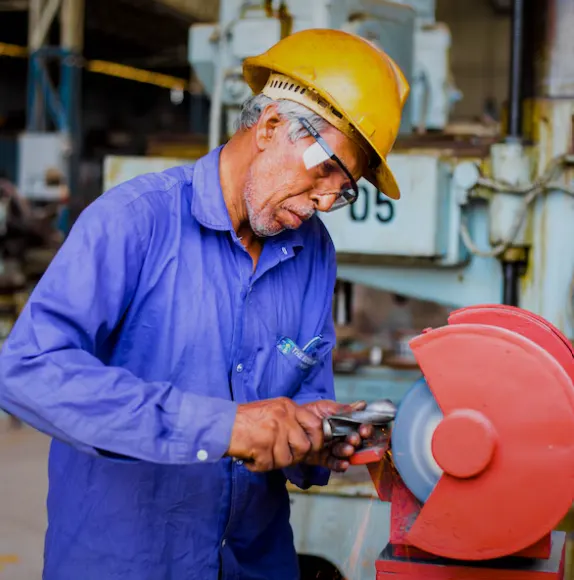
Even though we all depend on the products and services of built-world workers like healthcare, leisure, dining, and consumer products, we tend to take it for granted that physical world workers will always be ready to serve. Historically, I think there’s been a negative stigma associated with blue collar jobs, which has led educators and parents to push the best and brightest onto college tracks toward white collar professions.
We’ve heard a lot about how artificial intelligence (AI) is affecting the workplace in recent months, particularly with generative AI becoming popular. It’s made me think about how technology and automation continue to transform not only our industries but our perception of what’s valued in professions and careers.
Initially, automation began replacing blue collar workers who were performing repetitive, unskilled tasks on assembly lines. Later, business process automation tools began taking over low-level office jobs like data entry and processing tasks. We all know this pattern is likely to continue, but what’s interesting to me is how rapidly the current developments in AI and machine learning are affecting more sophisticated white collar jobs in fields such as legal, marketing, and programming.
For months, we’ve seen headlines about a growing number of layoffs in white collar professions and the increasing difficulty of landing new white collar jobs, coupled with the ongoing shortage of blue collar workers.
I think this is a signal that we’re about to see AI, robotics, and automation flip the status of the white collar professional and blue collar worker for the first time in history.
Technology and Robotics Can’t Easily Manage the Built World
The crux of what’s happening now is that AI excels in the digital world, easily processing bits, bytes and data faster than humans can imagine. Within seconds, AI can analyze massive amounts of data and uncover trends and patterns that could take a human weeks or even many lifetimes to replicate. The ability to do so means that the potential for taking over many cerebral tasks, more common in the white collar world, is huge.
The fact is that comparable technology simply does not exist in the built world, and I believe we’ve still got a long way to go in this area. Much work is still being done to “teach” AI and robotics to take in sensory inputs like humans and develop “common sense” knowledge. Although both Boston Dynamics and more recently the Tesla Bot have announced big plans for robotic humanoid developments for both manufacturing and all-purpose applications, they admit that significant issues exist. Developers acknowledge that humanoids are “staggeringly difficult to build and engineer to perform reliably.” Things like achieving balance, performing human movements, or simply not falling down when bumped are challenging.
Rising Demand for Labor in Physical World
After years of watching thousands of jobs go remote during the global pandemic, we’re now seeing the repercussions. The vast majority of industries that must operate in the physical world such as healthcare, brick-and-mortar retail, food service, and manufacturing are suffering from significant labor shortages.
I’ve been talking with many of UpKeep’s customers in recent weeks, and the number one challenge they all face is finding and retaining skilled technicians. The aging workforce is retiring, taking years of accumulated knowledge with them. Companies simply cannot find young, skilled technicians. Those that they do hire require a significant amount of education, and once that investment is made, many move onto other jobs, taking that valuable training with them.
The bottom line is that many careers rooted in the physical world are simply harder. They can be more physically taxing, and they often require managing difficult relationships with other people. They are frequently less predictable and are impacted by things out of an employee’s direct control.
What Will It Take to Bring People Back Into the Built World?
Interestingly, I believe we’re beginning to see a major shift in valuing these careers that must occur in our physical world. Over the last few years, salaries and compensation have been on the rise. Becker’s Hospital Review noted the largest salary budget increase in 20 years for healthcare workers. Leisure and hospitality workers saw their hourly rates increase by nearly 22 percent post-pandemic. And manufacturers are rethinking wages and compensation, adding sign-on bonuses, greater work schedule flexibility, non-compensation rewards, more frequent salary increases, and retention incentives.
Coupled with rising layoffs and difficulty in landing traditionally white collar jobs, the power of AI may be elevating blue-collar and other built-world positions to new levels. Pay and benefits are already on their way up, soon to equal and even exceed some white collar positions.
The bigger challenge, I believe, will be to change society’s mindset about these built-world professions. We all depend on our physical world, and up until recently, have taken it for granted that others would be there to serve our healthcare, leisure, dining, and consumer-focused needs and desires. Unless we encourage our young people and those struggling to make it in the white collar world that built-world careers are important, valued, and fulfilling, all of us will soon feel the consequences of a shrinking availability of physical world goods and services.
Want to keep reading?



Article
Title 42 Just Ended. Will U.S. Immigration Policy Changes Close the Labor Gap?



Article
Navigating the Debt Ceiling Dilemma: A Page from the Startup Playbook



Article
300 Million Square Feet of Office Space To Be Vacant by 2030. What Happens to the Building Workers?
4,000+ COMPANIES RELY ON ASSET OPERATIONS MANAGEMENT
Leading the Way to a Better Future for Maintenance and Reliability
Your asset and equipment data doesn't belong in a silo. UpKeep makes it simple to see where everything stands, all in one place. That means less guesswork and more time to focus on what matters.






![[Review Badge] Gartner Peer Insights (Dark)](https://www.datocms-assets.com/38028/1673900494-gartner-logo-dark.png?auto=compress&fm=webp&w=336)